

Fascinating facts for curious travellers
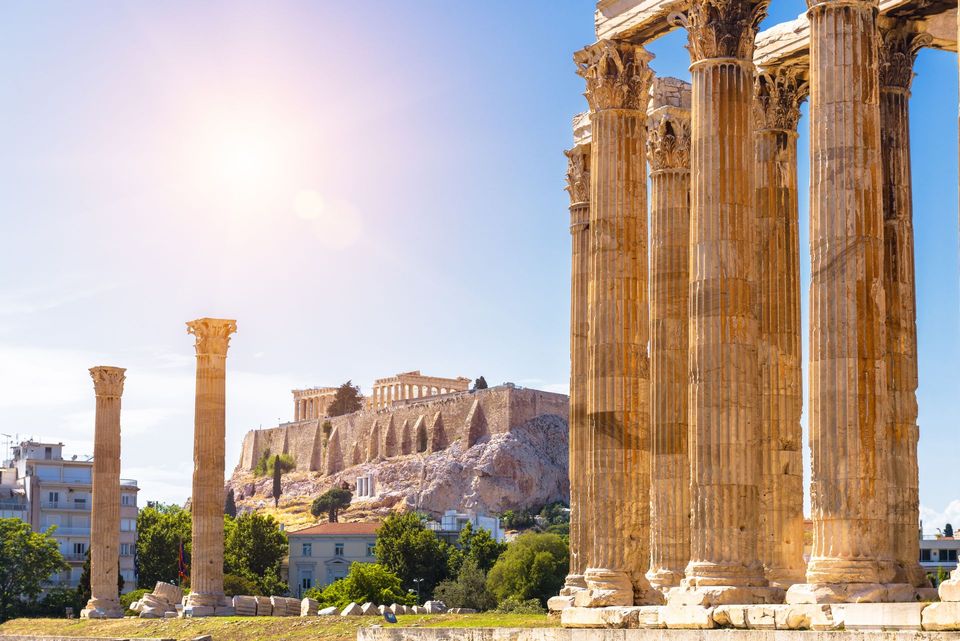
Ancient Greece still shapes the way we think about politics, sport, theatre and art. A little background turns a walk among old stones into a conversation with the past, so here are ten ideas worth carrying with you to the sites you visit in Greece.
The birthplace of democracy
Athens is widely regarded as the birthplace of democracy. The reforms of Cleisthenes in 508/507 BC gave citizens a direct voice in the Assembly, and the system flourished through the 5th century BC. It was a limited democracy by today’s standards — women, enslaved people and foreign residents could not vote — yet the idea that citizens decide together still resonates today.
Where the Olympic Games began
The ancient Olympic Games were a religious festival in honour of Zeus, held every four years at Olympia in the western Peloponnese. Athletes from rival city-states competed in running, wrestling, boxing, chariot racing and the pentathlon, which included the discus. The modern Games, first held in Athens in 1896, still look back to this tradition. Olympia is a long but rewarding day from Athens on our private day trip to Ancient Olympia.
Myths that still captivate
Greek mythology is a tapestry of gods, heroes and fabulous creatures. From Zeus, king of the gods, to Odysseus and his long journey home in Homer’s Odyssey, these stories still fire the imagination and offer a window into what the ancient Greeks believed and valued.
Architectural marvels
The Parthenon, the temple of Athena on the Acropolis, was built in the 5th century BC and is admired for its harmonious proportions and subtle refinements. Down in the Ancient Agora, the Temple of Hephaestus is one of the best-preserved ancient temples anywhere, partly because it was later used as a church. A licensed guide brings the monuments to life on our Acropolis and Parthenon tour.
A philosophical legacy
Socrates, Plato and Aristotle asked questions about knowledge, ethics and how to live a good life that philosophers still debate. Standing in the Agora, where Socrates once talked with his fellow Athenians, makes those conversations feel surprisingly close.
The Oracle of Delphi
Delphi, on the slopes of Mount Parnassus, was home to the sanctuary of Apollo. His priestess, the Pythia, gave the oracle’s answers, and rulers and ordinary people alike came to consult her before important decisions. Today Delphi is a UNESCO World Heritage Site and an unforgettable day out: see our Delphi day trip from Athens.
The birth of theatre
The Athenians made theatre a civic celebration. Tragedies and comedies by Aeschylus, Sophocles, Euripides and Aristophanes were first staged at the Theatre of Dionysus, on the south slope of the Acropolis, and they are still performed around the world. The great theatre of Epidaurus, famous for its acoustics, is the first stop of our Epidaurus, Sunken City and Aegina or Aponisos cruise, with a guided theatre visit as one of the options.
Mathematics and science
Euclid’s Elements set out geometry in a way that was taught for more than two thousand years, and Archimedes made lasting discoveries in mathematics, physics and engineering. Both worked in the wider Hellenistic world — Euclid in Alexandria, Archimedes in Syracuse — a reminder of how far Greek culture reached.
Festivals for the gods
The ancient Greek year was full of festivals. The Dionysia honoured Dionysus with theatre competitions, while the Eleusinian Mysteries, held at Eleusis west of Athens, honoured Demeter and her daughter Persephone and the cycle of life, death and rebirth.
Art and sculpture
Greek sculptors and potters prized beauty, balance and close observation of the human body. From the Aphrodite of Milos (the Venus de Milo, now in the Louvre) to painted vases decorated with myths, their work set standards that artists followed for centuries. In Athens, the National Archaeological Museum and the Acropolis Museum let you see many masterpieces up close.
Visit these places with curiosity and respect: they are not simply ruins, but windows into a civilisation that helped shape the world we live in. Let the stories of gods and heroes walk with you, and enjoy the moment when a stone you are standing beside suddenly starts to make sense.
Ready for a day out?
Explore our current experiences More travel stories
Visiting between November and March? See what runs in winter